Who runs it
Our Articles of Incorporation require a veteran majority board. One director is seated so far, the founder, and the remaining seats are open. The buildings sit with a tradesman who has walked houses for fifty years.
The founder
Our Articles of Incorporation, amended October 14, 2026, require a veteran majority board (no fewer than fifty percent plus one), at least one woman veteran director from the third director and at least two from the seventh, and a veteran Chair. The board is planned at nine to eleven members within twelve months. That is where the military expertise will sit, and it is fixed in the Articles rather than promised.
Our founder is a civilian. He is not a veteran and did not serve. He came out of the building trades. He is a Retired Journeyman A of Sheet Metal Workers' Local 73, greater Chicago. That is the top classification in the local: the full scope of the trade, the building trades work rather than the narrower box shop, factory or sign classifications beneath it. It is a standing within the trade rather than a certificate. It has no issuing body and no expiry, and it does not lapse on retirement the way a certification does.
It starts before the union. In the 1970s his father ran a business in Roselle, Illinois called House Mechanics, which did exactly what the name says. It would go into a house, write down everything wrong with it, then fix all of it. It also built seven homes from the ground up for a development firm, his father superintending, he and a friend doing as much of the work as the schedule allowed. He didn't pour the foundations. He did float and finish the basement floors. He worked all of it through his teen years.
Then he was homeless at seventeen. He spent that year living in his car, through a northern Illinois summer and winter, with no agency, no program, and no person to offer help. That year is why this program is built the way it is, with low barrier admission, any discharge accepted, and eighteen months instead of a ninety day clock. The order matters: the trade education came first, and the homeless year interrupted it rather than preceding anything.
Read that against what this organization needs before it signs a lease. It needs somebody who can walk a candidate house, produce a written findings sheet and price the remedy. That competence comes from the family business he was raised inside, done on other people's homes decades before this existed.
Then the trade. He was organized into the local on residential work, mechanical only (furnace, air conditioning, ductwork and ventilation). He moved quickly to light commercial, and from there into high rise, industrial and institutional construction, rising to General Superintendent with direct authority over a workforce exceeding 350 tradespeople. The arc is worth more here than the peak: this organization leases and operates houses, and the person walking a candidate property has done residential work with his own hands rather than reasoning about it by analogy from commercial jobs.
He finished his career in the field as a Union Sheet Metal Worker out of Local 73 in Chicago. That is how he describes himself, and it is the right order to put it in.
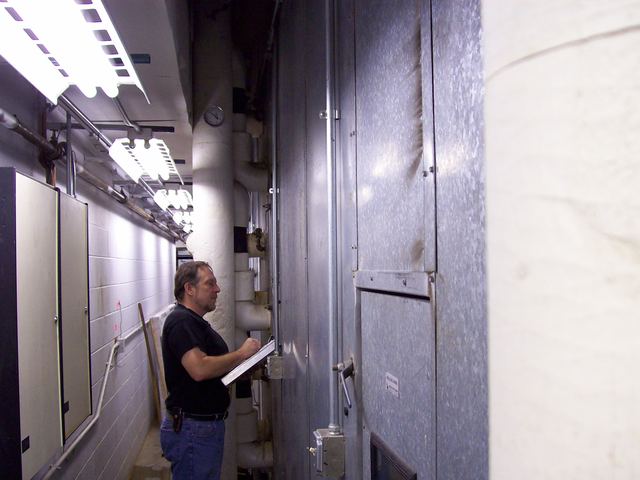
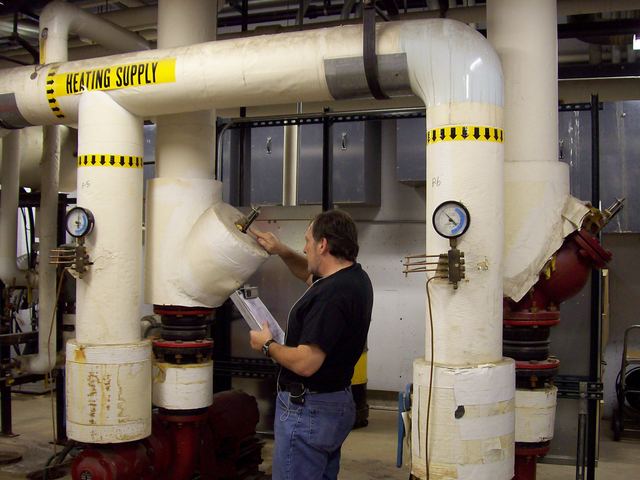
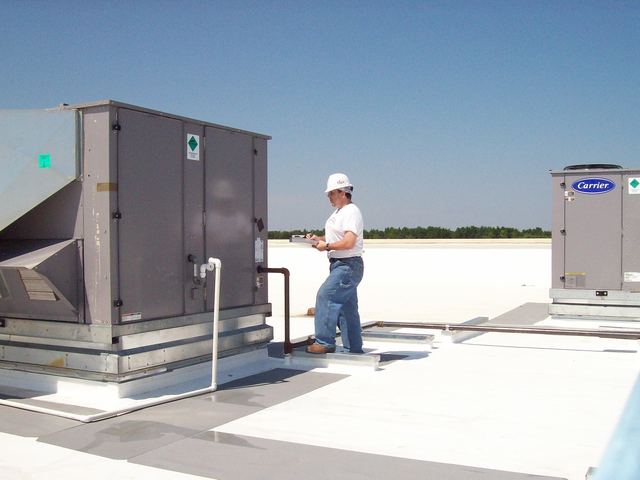
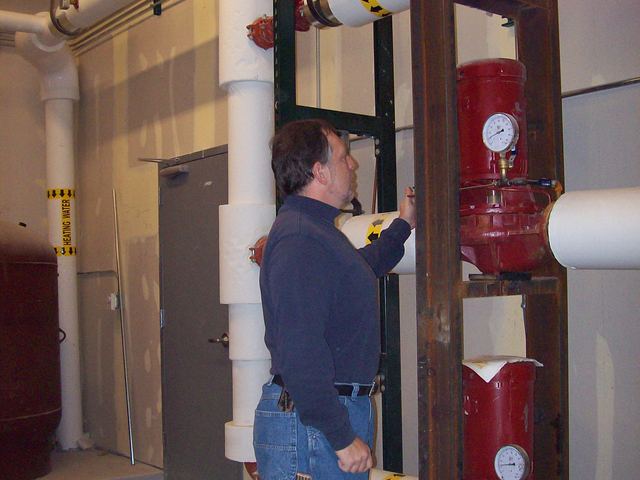
Years certifying hospitals and public buildings to ventilation code (air testing and balancing, indoor air quality, fire smoke damper and smoke control verification). Asked what mattered most across twenty five years, he did not name a building or a title. He named protecting public health.
He did this work before he was a General Superintendent, alongside being one, and chose to finish in it rather than in an office. In his own words: "by the end, I liked just being responsible for myself, not running work or leading big jobs, just me, my instrumentation/tools and my pen."
The pen is the report. One man, his instruments, and his signature certifying that a building is safe for the people inside it. A hospital ward and a four bedroom house holding seven adults are the same problem at different scale. In both, more people than the design assumed are breathing air a system has to be verified to deliver.
Journeyman A scope covers HVAC duct fabrication and installation, building decking, architectural sheet metal, flashings, gutters and siding. Those are exactly where older residential stock fails, which is what gets negotiated at lease signing and paid for at turnover.
The trade's jurisdiction runs to fifteen ton HVAC capacity. A residential system is roughly one and a half to five tons, so every house this organization leases sits well inside it. The person writing the ventilation specification installed those systems for a living.
A business agent dispatched him and a senior member of the local on short call, commercial and industrial, across many types of work within the Journeyman A scope. Short call is breadth, and it is also standing: a business agent chooses who gets sent, and who gets paired with a senior man.
He came up in a trade where every worker is personally accountable for whether the man beside him goes home at the end of the shift, at height, where a lapse can end in a funeral. That is the origin of the staff safety program, and why its rules are absolute rather than advisory.
No OSHA certification, and this organization claims none. The certifications behind the hospital ventilation work, from the Testing, Adjusting and Balancing Bureau (TABB) and the National Energy Management Institute (NEMI), lapsed at his retirement and nothing here relies on them. What he holds is upwards of a hundred hours of employer provided safety training on sites where compliance was a condition of working, and two hundred hours of trade training through Local 73. The union training is documented, as the trades document training, by certificates of completion rather than certifications. Commissioning and life safety verification are contracted to a currently certified technician, named in the scope of work, whose credential is verified before the engagement is booked. Most owners never check. This one will.
50%+1
veteran floor on the board, fixed in the Articles
9–11
directors seated within twelve months
7.4
paid staff at the end of year one
1:12
case manager caseload ceiling
Governance
Mark F Gremillion, Founder & Executive Director, is the only seated director. Every other seat is open. Rather than list aspirations, here are the seats, what each one is for, and which are still open, so anyone reading this can see exactly what the organization is recruiting for and, if they are the right person, put themselves forward.
Our registration with the State of Colorado lists that one director. Directors are added to the state filing as they are seated, and no person appears on this page or in any filing before they have accepted the seat in writing.
| Seat | What it carries | Target | Status |
|---|---|---|---|
| Veteran directors (majority) | No fewer than fifty percent plus one of the full board. The military expertise of this organization sits here | 5–6 | Open |
| Women veteran directors | At least one from the third director and two from the seventh, one with lived experience of the population the thirty percent floor serves | 2 | Open |
| Licensed behavioral health professional | Assesses clinical qualifications the rest of the board cannot. Seated by Month 3 (December 2026) | 1 | Open |
| Attorney | Lease review, employment questions, the conflict of interest procedure. Seated by Months 4–5 (January to February 2027) | 1 | Open |
| Finance / audit | Chairs the Finance & Audit Committee, reviews the Form 990 before filing | 1 | Open |
| Founder & Executive Director | Mark F Gremillion. Leaves the voting board when he becomes a paid employee in Month 10 (July 2027) | 1 | Seated |
Bios go here as directors are seated, with name, service branch and era where the director chooses to state it, professional background, and the committee they chair. Nothing is published about any director without their written consent, and no name appears on any material before they have agreed to it.
The founder steps off the voting board at paid service. That is written into the bylaws draft rather than promised, and it is the provision a funder should check first when a founder led organization asks for money.
